

TOUR
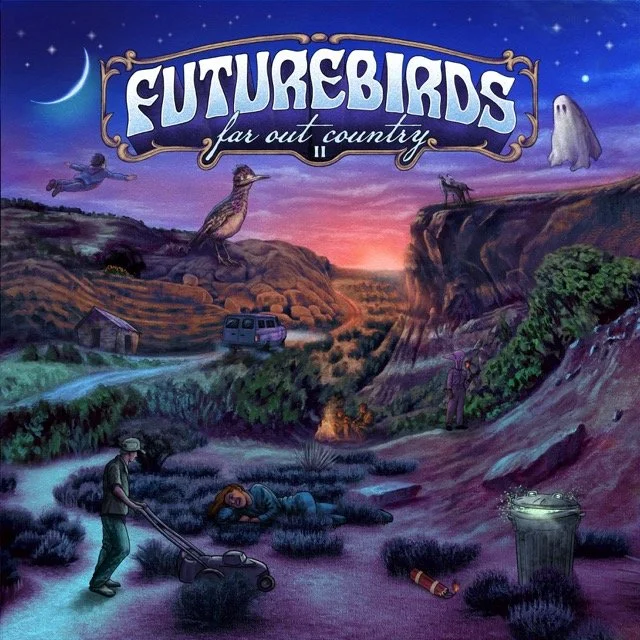
NEW ALBUM - FAR OUT COUNTRY - OUT NOW
SHOP MERCHANDISE





Music






About
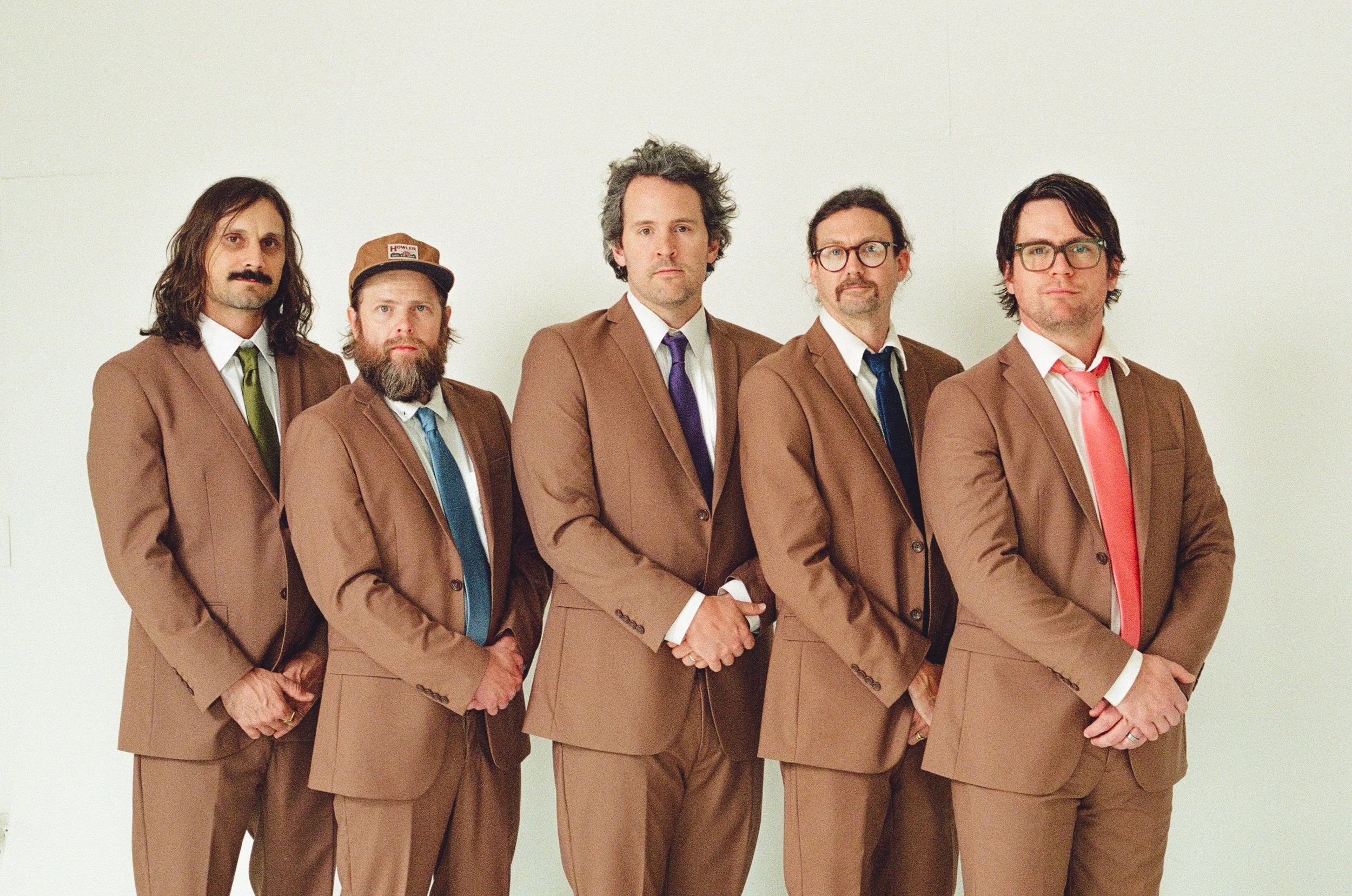
Photo Credit: Jacq Justice
Futurebirds have spent nearly two decades in flight, building their audience show by show, forever rediscovering themselves in a swirl of rock & roll and cosmic Americana. For Carter King, Thomas Johnson, and Daniel Womack — the band's three frontmen, with voices distinct enough to anchor their own songs and unified enough to sound like one band — being in Futurebirds has often meant being gone. They've traveled America's highways and backroads. They've seen its dive bar stages and amphitheater bleachers. With Far Out Country, though, they stop focusing on the horizon ahead of them and boldly live in the present. They’re no longer rushing toward the next destination. Far Out Country IS the destination.
A two-volume collection of 18 songs, Far Out Country casts the widest net of the band's career. Amplified anthems like "Sleepless in the Cage" — a loud, lovely tangle of electric guitar and harmonized voices — rub shoulders with the gentle acoustics of "Sienna Life." Rootsy rockers like "Sober Somewhere" give way to the atmospheric quiet of "All I Want." There are songs for daytime road trips and songs for nighttime campfires. Songs for sun-streaked landscapes of rolling green hills and songs for darkening skies of blue-black clouds. For a band that once drew praise from USA Today for "mixing Neil & Crazy Horse with My Morning Jacket," Futurebirds have never sounded so singular, making music that nods to their country-rock heroes while proudly avoiding classification altogether. As Johnson explains, "the longer we play together, the less our music sounds like it belongs to a genre, and the more it just sounds like Futurebirds."
With Far Out Country, it's not just about the music. It's about conversation. Since forming the band as students at the University of Georgia, Futurebirds have grown up together, making the transition from hometown heroes to national headliners. They're not undergrads anymore; they're fathers and family men, caught halfway between their growing responsibilities at home and their duties on the road. Far Out Country finds them talking honestly about life's moving targets and the evolving bonds that hold them together. "This is the sound of three people in genuine dialogue, giving their perspectives on similar stages in life," Johnson adds. "It feels like a conversation in a bar, late at night, or at somebody's house over drinks."
"There's a line from the song 'Featherbed' that talks about 'being in a constant state of becoming,'" says Womack. "That's important to us. We're adventurous people who want to create, and the best way to do that is to constantly discover yourself over the course of your entire life. A constant state of becoming yourself."
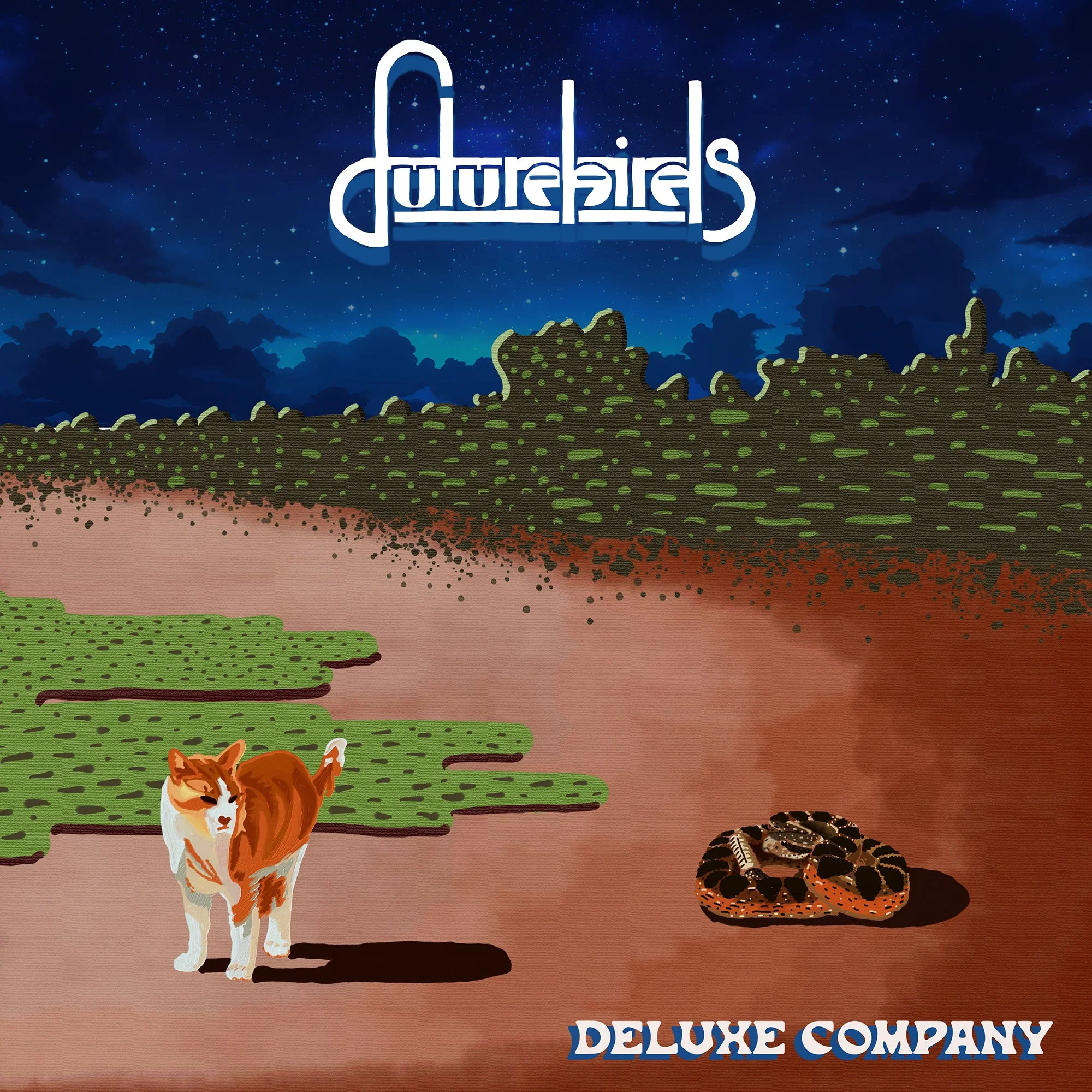
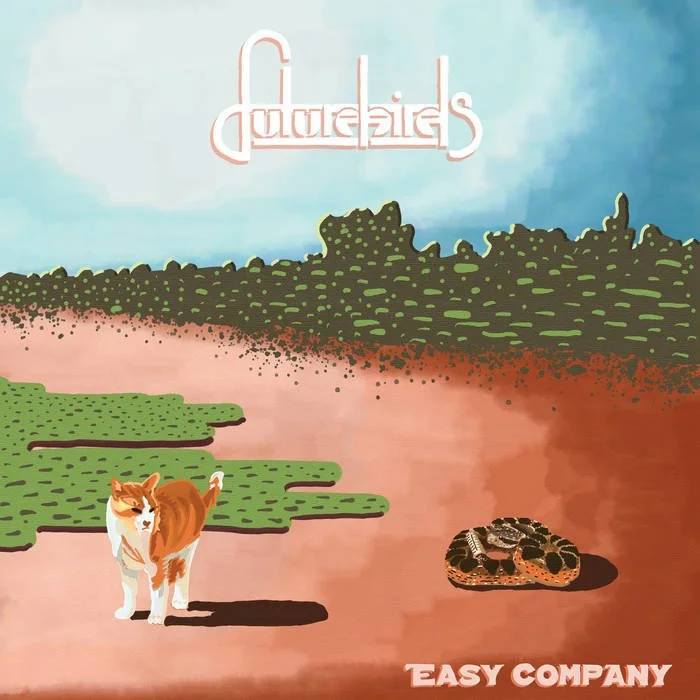
Released two years after the critically-acclaimed Easy Company, Far Out Country reunites the band with Grammy-winning producer Brad Cook (Waxahatchee, MJ Lenderman, Bon Iver). Half of the album's tracks were recorded at Sonic Ranch in the Texas borderlands. There, the band focused on live-in-the-studio performances that showcased the wild, sweaty spirit of their beloved stage shows — the same gigs that prompted Rolling Stone to call them "the most captivating rock act touring today." The other nine songs were recorded piece-by-piece in much smaller studios, with the band’s own Tom Myers producing four tracks. This was a different approach that required the bandmates to be methodical and deliberate with each layer of sound they added, and Futurebirds welcomed the challenge of fitting both recording styles into a congruent whole.
"We wanted to complete the story with Brad," King explains. "There was unfinished business, so it felt right to work with him again. It was a continuation of what we'd been doing, and a bit of starting from scratch, too."
It felt right to try new things, too. On previous albums, each of Futurebirds' three songwriters would typically sing lead vocals on his own material. This time, the guys bent those self-imposed rules. "Carter wrote the title track," Womack notes, "but I wound up singing it. We've never really done that before, and it opened us up, creatively."
Old habits have remained, too. Futurebirds are still "masters of reverb-steeped country rock infused with Southern charm," as The New Yorker once gushed, and longtime fans will find plenty to recognize in these songs. The pedal steel guitar still drifts skyward, its gorgeous textures gradually disappearing into the ether. Bassist Brannen Miles and drummer Tom Myers still offer a blend of pastoral punch, loping groove, and loud bash 'n' crash. The three frontmen still harmonize like lifelong friends, their drawling voices blending into one, their distinct personalities coalescing into something rich and cohesive. Far Out Country doesn't showcase a rebranded group as much as a reenergized one, and Futurebirds have never defined themselves so clearly before.
"If you spend your present moment too wrapped up in the future, or the past, you'll miss what's right in front of you," says King. "This record is us trying to take an honest look at ourselves, and where we’ve been – and asking if the beliefs we’ve carried along the way are still serving us, where we are right now.”
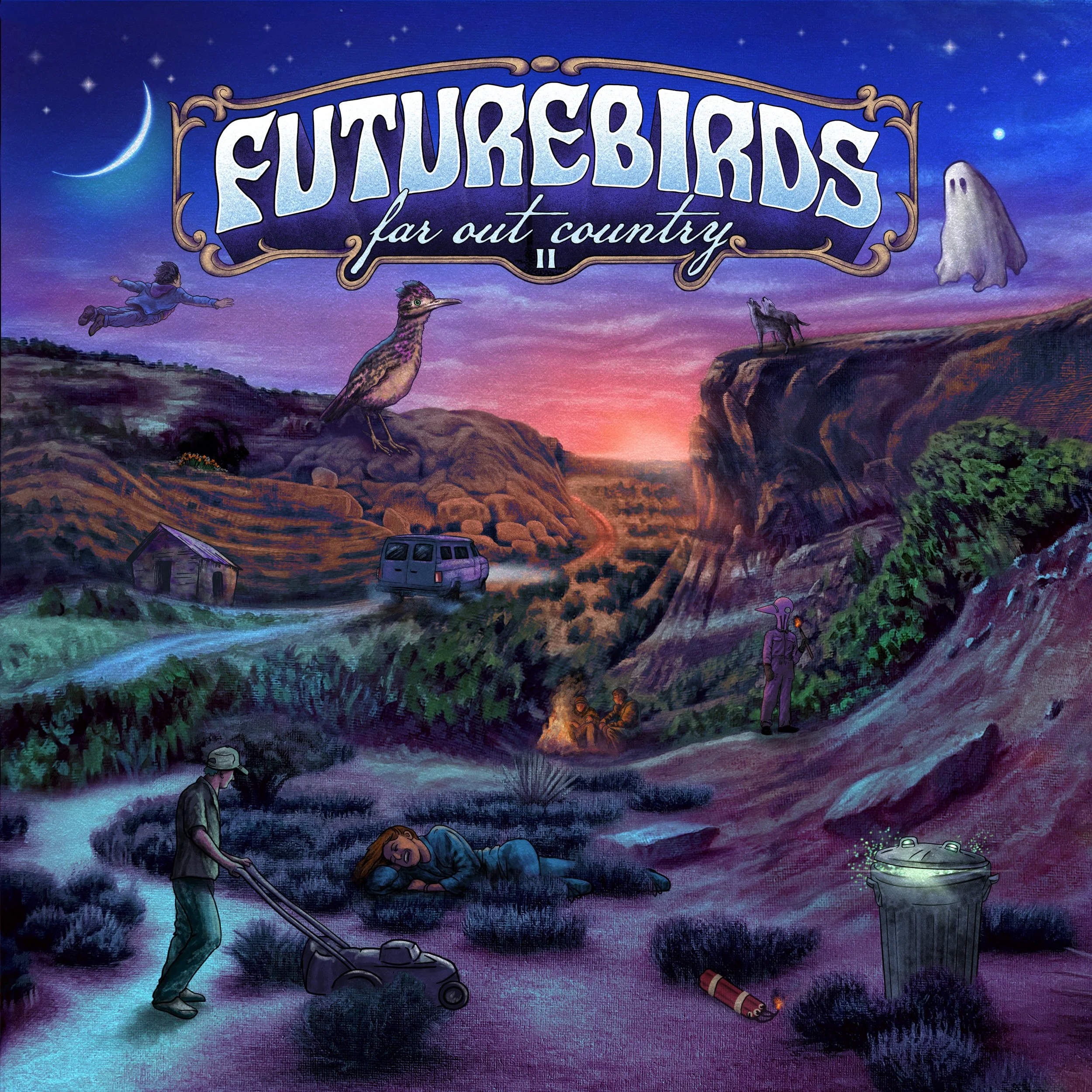
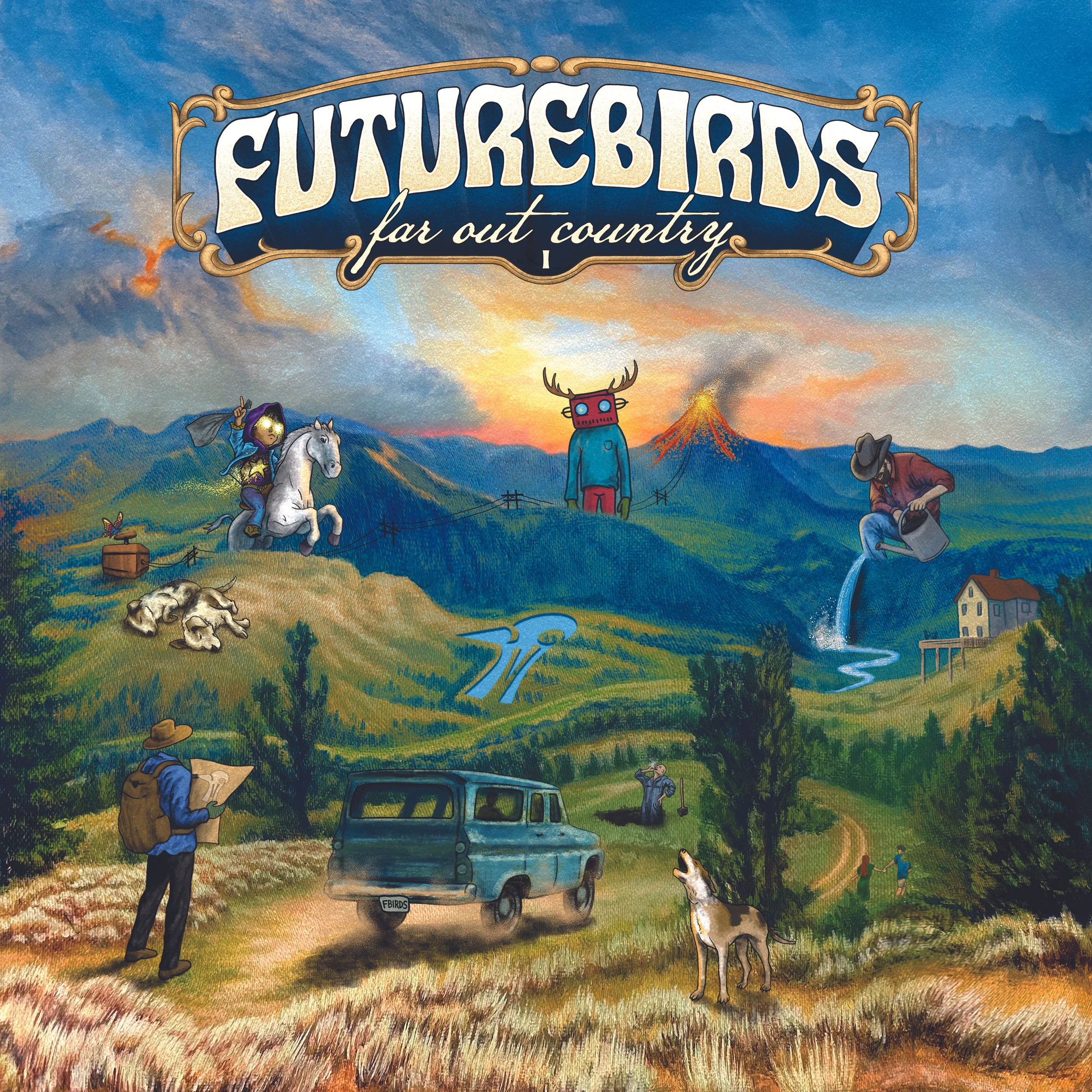
Sequenced into two stylistically-distinct halves — Volume 1, also known as The Day World, and Volume II, also known as The Night World — Far Out Country is a soundtrack to self-discovery. Futurebirds aren't afraid to ask themselves the hard questions, even if their songwriting makes it all sound easy. Here, they invite us into their world: a place where the jukebox is great and the conversation never lags.
"It's an inside joke amongst us that with each album, we think it's our best work yet," says Womack. "And the other side of the joke is, we're always right! We're lucky to be able to say that."
Listen to Far Out Country available everywhere now: https://futurebirds.komi.io